
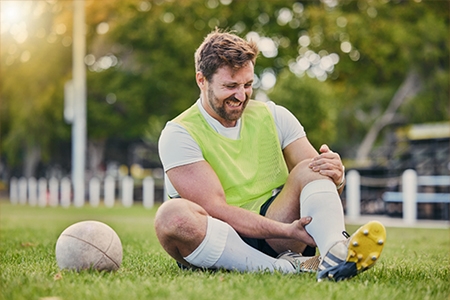
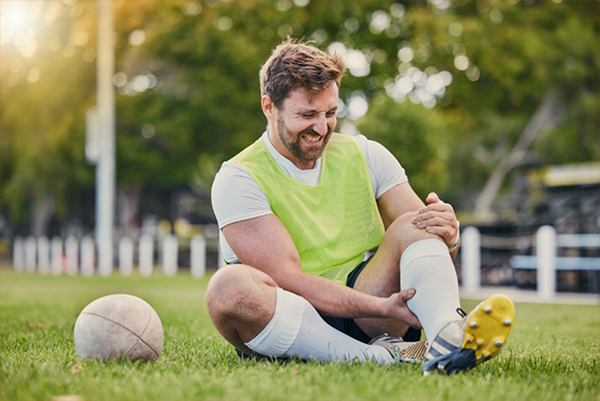
You wait all week to get active, then try to fit your entire workout or favorite sport into the weekend. Sound familiar? That sudden burst of activity can leave your muscles, tendons, and joints struggling to keep up. From sprains and strains to knee and shoulder injuries, weekend warriors can face avoidable risks. Discover practical ways to stay active while helping protect your body.
Why Weekend Warriors Are Prone to Sports Injuries
A "weekend warrior" is typically someone who stays relatively active but concentrates much of their exercise or recreational sports into limited periods. The problem is not necessarily the activity itself. It is often the sudden increase in intensity, duration, or frequency.
The body needs time to adapt to physical demands. Jumping into a demanding basketball game, tennis match, long run, or intense workout without adequate conditioning can overload tissues that are not prepared for the stress.
Performance Orthopaedic Surgery & Sports Medicine notes that sports injuries can occur because of accidents, inadequate training, improper protective equipment, or insufficient stretching and warm-up.
Warm Up Before You Play or Exercise
A proper warm-up prepares the body for movement by gradually increasing activity and improving flexibility. Going directly from sitting at a desk or driving to sprinting, jumping, lifting, or cutting can place unnecessary stress on muscles and soft tissues.
Dynamic movements that reflect the activity you are about to perform can be particularly useful. A runner might begin with brisk walking and controlled mobility exercises, while someone preparing for basketball may incorporate light jogging, movement drills, and gradual changes of direction.
The practice also emphasizes warming up and cooling down as part of sports injury prevention.
Increase Training Gradually Instead of Doing Too Much at Once
One of the most common mistakes among recreational athletes is trying to make up for missed workouts in a single session.
Increasing mileage, lifting substantially heavier weights, adding more games, or suddenly exercising at a much higher intensity can overwhelm the body's ability to recover. Gradual progression gives muscles, tendons, bones, and joints an opportunity to adapt.
Recent guidance published by the practice similarly emphasizes that overtraining without adequate recovery can contribute to stress fractures, tendinopathies, and chronic joint inflammation.
If you have been inactive during the week, consider building activity progressively rather than attempting to reach your desired performance level immediately.
Strengthen the Muscles That Support Your Joints
Strength training is not only about improving athletic performance. Strong, well-conditioned muscles can help support the joints and improve movement control.
For weekend athletes, strengthening programs may focus on the muscles involved in their chosen activities. Lower-body strength is important for sports involving running, jumping, and cutting, while shoulder and upper-back conditioning can be valuable for activities involving repetitive throwing or overhead movements.
Physical therapy can also help identify movement patterns or strength deficits that may contribute to injury. The practice offers sports physiotherapy focused on preventing, evaluating, and managing injuries associated with sports and exercise participation.
Protect Your Knees During High-Impact Sports
The knee is particularly vulnerable during activities involving sudden stops, pivots, jumps, and changes in direction.
Weekend athletes may experience problems involving the ACL, meniscus, cartilage, or other structures around the knee. An ACL injury, for example, can occur during a sudden change in direction or awkward landing, while meniscal injuries can develop after twisting or impact.
Good conditioning, appropriate technique, gradual training progression, and adequate recovery can all help reduce unnecessary stress on the knee.
If your knee repeatedly swells, locks, gives way, or remains painful after activity, continuing to play through the symptoms may not be the best strategy.
Don't Ignore Shoulder Pain From Overuse
Weekend sports such as tennis, golf, swimming, and recreational throwing can place considerable repetitive stress on the shoulder.
Shoulder pain does not always follow one obvious traumatic event. Overuse can affect tendons and other soft tissues, particularly when activity levels suddenly increase.
The practice notes that persistent shoulder pain may require evaluation when rest and basic measures do not resolve symptoms. Depending on the underlying problem, treatment may include physical therapy, medication, injections, or surgery.
Pain that continues after you stop playing deserves more attention than ordinary post-exercise soreness.
Use the Right Equipment for Your Activity
Properly fitted athletic shoes and sport-specific protective equipment can provide another layer of injury prevention.
Depending on the activity, protective equipment may include pads, elbow guards, eye protection, mouth guards, helmets, or other appropriate gear. Athletic footwear should also be suitable for the surface and demands of the sport.
Equipment cannot prevent every injury, but using the right gear and making sure it fits properly can reduce avoidable risks.
Give Your Body Time to Recover
Recovery is part of training, not time lost from training.
If you are sore or fatigued after a demanding activity, giving your body time to recover can help prevent excessive tissue stress. Continuing to exercise while injured or exhausted can alter movement patterns and potentially increase the load on other parts of the body.
Rest, hydration, adequate nutrition, and sensible scheduling should all be part of a recreational athlete's routine.
When Should a Weekend Warrior See a Sports Medicine Specialist?
Some soreness after unfamiliar exercise is expected. Persistent or worsening symptoms are different.
Consider an evaluation if you experience significant swelling, persistent joint pain, instability, restricted movement, difficulty bearing weight, or symptoms that repeatedly return whenever you exercise.
The practice provides sports medicine care for common injuries including sprains, strains, fractures, dislocations, shoulder conditions, and knee injuries, with both nonsurgical and surgical treatment options available when appropriate.
Early evaluation can help determine whether you are dealing with ordinary soreness or an injury that needs specific treatment.
Frequently Asked Questions About Weekend Warrior Injuries
How can I prevent injuries if I only exercise on weekends?
Start each session with an appropriate warm-up, gradually increase activity intensity, maintain strength and flexibility during the week when possible, use appropriate equipment, and allow enough recovery between demanding workouts.
What are the most common weekend warrior injuries?
Common sports injuries include sprains and strains, as well as knee and shoulder injuries. Depending on the activity, athletes may also experience fractures, dislocations, tendon problems, meniscus injuries, or ligament injuries.
Is it safe to exercise when I am sore?
Mild muscle soreness after unfamiliar exercise may improve with rest and gradual activity. However, sharp or persistent pain, significant swelling, instability, weakness, or restricted movement may indicate an injury and should be evaluated rather than ignored.
How quickly should I increase my workout intensity?
There is no single progression that works for everyone. A safer approach is to increase exercise volume and intensity gradually while allowing adequate recovery. Sudden increases in training demands can contribute to overuse injuries and tissue overload.
When should I see a sports medicine specialist for an injury?
Seek evaluation when pain persists, repeatedly returns, causes swelling or instability, limits normal movement, or prevents you from participating in your usual activities. Acute injuries involving significant pain, deformity, inability to bear weight, or substantial swelling should be assessed promptly.
Stay Active Without Letting the Weekend Set You Back
Being active on the weekends should enhance your health, not leave you sidelined for the following week. A combination of appropriate conditioning, gradual progression, warm-ups, recovery, and attention to early symptoms can help reduce preventable sports injuries. If pain or an injury is interfering with the activities you enjoy, a sports medicine evaluation can help identify the problem and determine an appropriate path back to activity.
Reference Links:
AUTHOR: Milan M. DiGiulio, M.D. – Orthopaedic Surgeon, Sports Medicine & Arthroscopy Specialist
Milan M. DiGiulio, M.D. is a board-certified orthopaedic surgeon with subspecialty certification in sports medicine. He specializes in arthroscopic surgery of the shoulder and knee, including labrum repairs, rotator cuff tears, ACL reconstruction, and meniscus repair. Dr. DiGiulio also provides non-surgical options such as orthobiologic treatments using platelet-rich plasma (PRP) injections. He serves as the Head Team Orthopaedic Surgeon for the North Carolina Courage professional women’s soccer team and is the founder of Performance Orthopaedic Surgery & Sports Medicine in 2009.
Credentials & Recognition
Dr. DiGiulio earned his undergraduate degree from the University of California, Los Angeles and his medical degree from Mt. Sinai School of Medicine in New York. He completed his orthopaedic surgery residency at Tufts University School of Medicine, serving as Chief Resident at Boston’s Floating Hospital for Children and New England Baptist Hospital. He was elected to the Alpha Omega Alpha Honor Medical Society and received the Oppenheimer Award for highest overall grade in his surgery rotation. Dr. DiGiulio has practiced as a Clinical Instructor in Orthopaedic Surgery at Tufts University School of Medicine. He is an active member of the American Orthopaedic Society for Sports Medicine and the Arthroscopy Association of North America.
Clinical Expertise
Dr. DiGiulio performs approximately 200 arthroscopic shoulder and knee procedures each year. His expertise includes minimally invasive arthroscopy, ACL reconstruction, meniscus repair, labral repair, rotator cuff surgery, and advanced non-surgical treatments such as PRP and orthobiologics. He emphasizes patient-centered care, precision surgical techniques, and comprehensive rehabilitation strategies to optimize outcomes for children, teens, and adults.
Medical Disclaimer: This information is for educational purposes only and does not constitute medical advice. For diagnosis and treatment recommendations, please consult with Dr. Milan M. DiGiulio or another qualified orthopaedic specialist.
Content authored by Milan M. DiGiulio, M.D., and verified against official sources.