
The roar of the crowd and the final seconds on the clock are the moments every athlete trains for. But what happens when excruciating pain rips through a knee or shoulder mid-game? For elite athletes, choosing whether to push through or step back becomes a high-stakes decision made in real time. Let’s explore the mechanisms behind common sports injuries and how elite athletes navigate knee and shoulder injuries.
Understanding When Pain Signals a Serious Sports Injury
Not all pain is created equal. The dull ache of a strenuous workout (known as delayed onset muscle soreness, or DOMS) is fundamentally different from the sharp, sudden jolt of an acute injury. Elite athletes are highly attuned to their bodies, but even they can misinterpret signals. Pain that signals a true mechanical injury, especially in critical joints like the knee and shoulder, is often characterized by specific symptoms.
Key Red Flags for Knee and Shoulder Damage
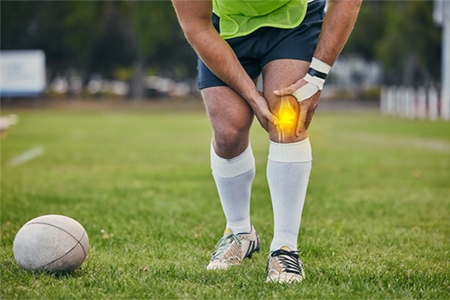
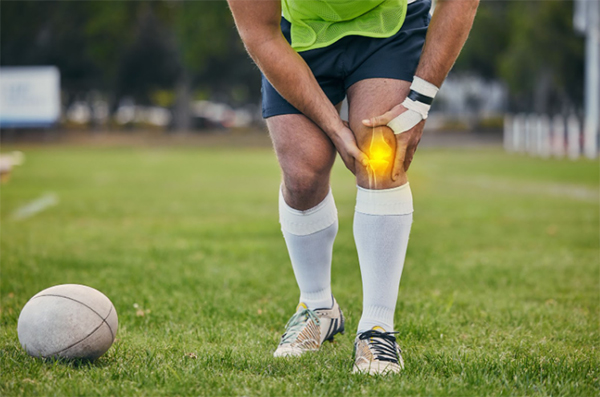
For the knee, a one-time or recurring popping feeling or locking sensation, sudden swelling, or instability when running or pivoting are major red flags, potentially indicating ligament tears like an ACL injury or meniscal damage.
For the shoulder, instability during a sport, pain associated with weakness, a grinding sensation, or the inability to lift the arm above the head suggests a significant structural issue, such as a rotator cuff tear or labral damage. Ignoring these specific, high-intensity signals can turn a manageable injury into a career-ending chronic condition requiring complex surgery and extensive rehabilitation.
Risk vs. Reward in Sports: How Elite Athletes Choose Safely
The professional sports landscape pressures athletes to maintain peak performance and availability. When an elite athlete presents with a joint injury, our assessment focuses not just on the damage itself, but on the stability of the joint and the type of tissue involved.
Stable Injuries: Athletes may be cleared to play through pain if the injury is stable (e.g., a mild ligament sprain or contusion) and can be controlled with bracing, taping, anti-inflammatories, and targeted physical therapy. The goal is symptom management without compromising joint integrity.
Unstable Injuries: If there is an obvious mechanical instability, a partial tear that could become complete, or a fracture that could displace, the athlete must be immediately removed from play. The risk of permanent joint destruction in these cases is far too high to justify continued performance.
The decision is always a collaborative effort involving the athlete, the team physician, and the specialist, relying heavily on advanced imaging and functional movement tests to quantify the risk.
Surgical and Non-Surgical Navigation: The Path Forward
When structural damage to the knee (such as a torn meniscus) or the shoulder (such as a partial rotator cuff tear) is confirmed, the immediate goal is to preserve the athlete’s longevity. Physical therapy and ultrasound guided joint injections may often be the first lines of defense for non-surgical cases. For athletes who choose to delay surgery until the off-season, an aggressive pre-habilitation program is crucial to maintain surrounding muscle strength and protect the compromised joint.
However, certain injuries, such as a completely ruptured ACL in the knee, require surgical reconstruction to restore joint stability and ensure a return to elite-level activity. The modern surgical approach prioritizes minimally invasive techniques such as arthroscopy to accelerate recovery and reduce scar tissue formation, proving that a setback doesn't have to mean the end.
The Takeaway: Prioritize Structural Integrity of Your Joints
From the weekend warrior to the world champion, the lesson remains the same: playing through pain is only safe when structural integrity is not compromised. The risk of ignoring sharp, sudden, or instability-related pain is long-term joint damage.
If you are navigating persistent joint pain or suspect an acute injury, consulting with a Sports Medicine specialist is the most prudent step toward understanding your diagnosis and designing a recovery plan that protects your athletic future. Contact our office to schedule a comprehensive evaluation of your knee or shoulder condition.
AUTHOR: Milan M. DiGiulio, M.D. is a professional sports head team physician who offers comprehensive Orthopaedic care for you and your entire family, specializing in Sports Medicine and Arthroscopic surgery of the shoulder and knee. Dr. DiGiulio performs over 200 arthroscopic shoulder and knee surgeries each year, using the most advanced surgical technology. Dr. DiGiulio is an advocate of non-invasive, non-surgical treatment options such as Physical Therapy and Orthobiologics.